Compartment meal trays are the backbone of tiffin services, catered events, and cloud kitchens serving complete meals. But "meal tray" isn't one product — the number of compartments changes what you can actually serve. Here's how to choose.
Looking to stock up? Browse our related product range for bulk pricing and fast delivery.
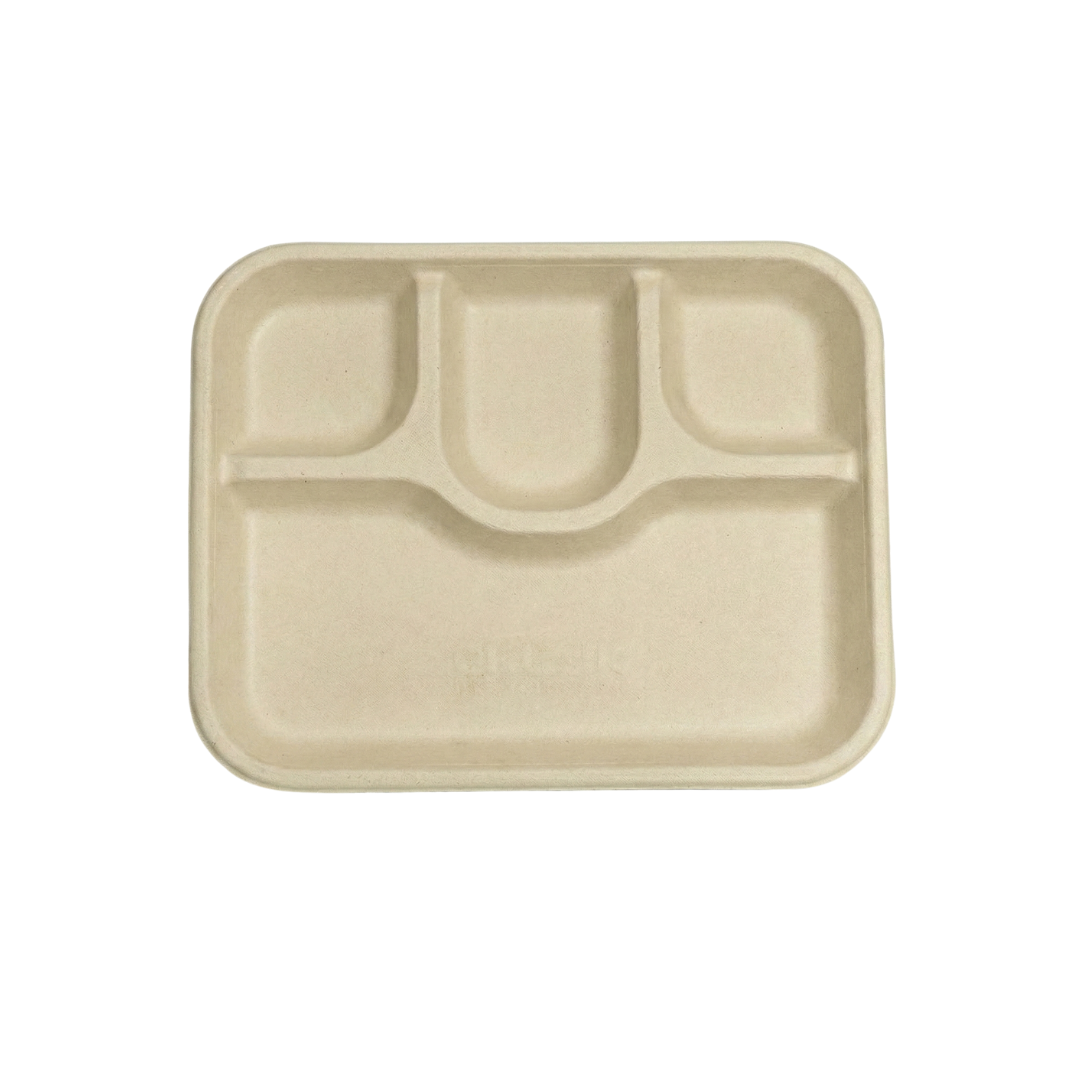
3-Compartment Trays
Best for simple combo meals: a main, a side, and a sauce or salad. Common in quick-service and value tiffin services where speed and low cost per unit matter most.
4-Compartment Trays
The most versatile size for Indian thali-style meals — typically main + rice/roti + dal + sabzi. This is the sweet spot for most catering businesses serving a full but not elaborate meal.
5-Compartment Trays
Adds room for a dessert or extra side, ideal for premium tiffin services or event catering where presentation matters as much as portioning.
8-Compartment Trays
Used for elaborate thalis or buffet-style event catering where multiple distinct dishes need to stay separated — weddings and large celebrations are the most common use case.
Choosing by Material
Bagasse meal trays are the standard choice for hot meals since they're compostable and naturally handle heat and moisture well. Matching lids are available for most compartment counts, which matters for delivery and takeaway orders where spill prevention is critical.
Frequently Asked Questions
What's the difference between a 3-CP and 5-CP meal tray?
A 3-CP tray suits simple combo meals (main + side + sauce), while a 5-CP tray adds room for a dessert or extra side — better suited to premium or event catering.
Do meal trays need a separate lid?
For delivery or takeaway, yes — a matching compartment lid prevents spillage and keeps food fresh during transport. Dine-in service can skip the lid.