Paper bags come in several distinct styles, each suited to different retail and food-service needs. Choosing the right one affects both function and customer perception.
Looking to stock up? Browse our related product range for bulk pricing and fast delivery.
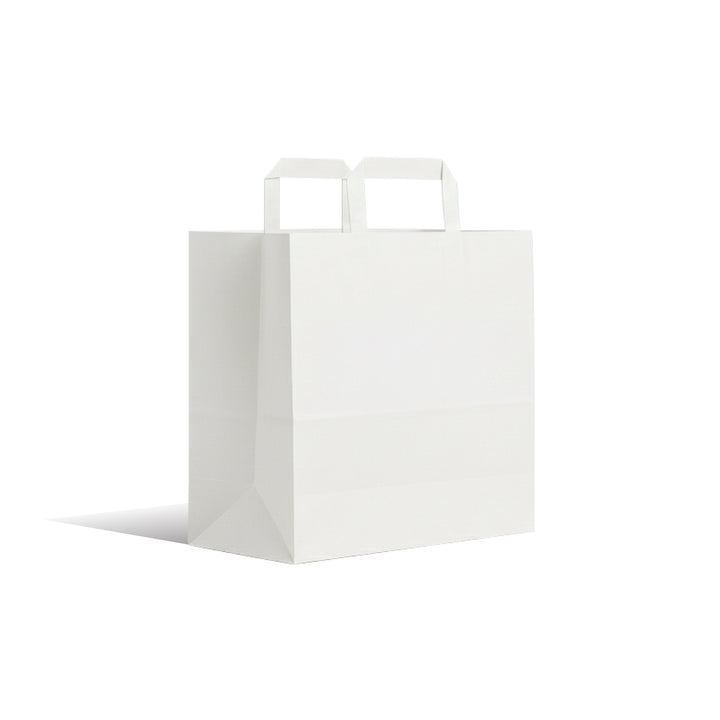
Flat Handle Bags
The classic carry bag format, with flat paper handles for easy transport. Versatile across retail, food delivery, and general carry-out use — this is typically the default choice for most businesses.
Square Bottom Bags
Also known as non-handle bags, these have a flat base that lets them stand upright — ideal for groceries, bakery items, or any use case where the bag needs to sit stable on a counter or in a car seat during transport.
D-Cut Bags
A simple, cost-effective cut-out handle design without a separate attached handle piece. A practical budget option for lighter-weight retail items where a premium handle isn't necessary.
Grease-Resistant Bags
Worth calling out separately — these are specifically treated to resist oil soak-through, essential for fried foods, pastries, and anything prone to leaving grease stains on standard paper.
Choosing by Use Case
Retail and boutique businesses generally lean toward flat handle bags for their premium feel. Grocery and bakery businesses benefit from square bottom bags for stability. Budget-conscious retail can use D-cut bags without sacrificing much functionality.
Frequently Asked Questions
Which paper bag style is best for groceries?
Square bottom bags are best for groceries — their flat base keeps items stable and upright, unlike flat handle bags which can shift and tip during transport.
Are D-cut bags weaker than flat handle bags?
D-cut bags are generally suited to lighter loads than flat handle bags, which have a separately reinforced handle better suited to heavier items.